
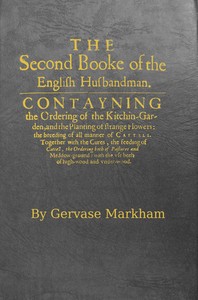
The English Husbandman (The Second Booke) by Gervase Markham
Read "The English Husbandman (The Second Booke) by Gervase Markham" Online
This book is available in the public domain. Start reading the digital edition below.
Book Preview
A short preview of the book’s content is shown below to give you an idea of its style and themes.
Let's be clear from the start: this is not a novel. There's no dashing hero or twisting plot. Instead, Gervase Markham sits you down, like a knowledgeable neighbor, and walks you through a full year of running a successful farm. He published the first part of this guide in 1613, and this 'Second Booke' acts as the advanced masterclass.
The Story
Think of it as the ultimate pre-industrial FAQ. Markham structures his advice around the calendar and the core elements of a working homestead. He starts with the foundation: the soil. He's obsessed with getting it right, detailing different types of manure and compost recipes like a chef sharing secret sauces. Then, he moves to the stars of the show: grains, hops, and hemp. For each, he gives specific, step-by-step instructions on planting, tending, harvesting, and processing. It's incredibly detailed. He'll tell you the exact time to sow barley, how to build a hop-yard, and the best way to dry hemp stalks.
The book also dives into the supporting cast: orchards, gardens, and even beekeeping. It's a complete system. One chapter you're learning to graft apple trees, the next you're figuring out how to position your beehives for maximum honey. The 'story' here is the relentless, knowledgeable effort to create order and abundance from the chaos of nature.
Why You Should Read It
This book clicked for me because it's practical wisdom from the source. History books often talk about 'agricultural revolution' in broad terms, but Markham shows you the nuts and bolts. You feel the urgency in his writing. This knowledge meant the difference between comfort and catastrophe. His tone is direct and confident, occasionally funny (his disdain for lazy farmers is palpable), and it completely demystifies the past. You realize these weren't primitive people stumbling around; they were sophisticated managers of a complex ecosystem.
It also reframes how we see 'old' knowledge. A lot of what Markham advocates—composting, crop rotation, working with local conditions—feels strikingly modern and sustainable. Reading it makes you look at your own backyard or a local farm with new respect.
Final Verdict
This is a niche read, but a deeply rewarding one. It's perfect for history lovers who want to move beyond kings and battles to everyday life, for gardeners and homesteaders curious about the roots of their practice, or for anyone who enjoys primary sources. It's not something you blast through in a weekend. It's best enjoyed in small sections, almost like a meditation. Keep it on your shelf, dip into a chapter now and then, and let Gervase Markham, your 17th-century life coach, remind you where the real stuff comes from.
This work has been identified as being free of known copyright restrictions. It serves as a testament to our shared literary heritage.
Logan White
1 year agoI came across this while browsing and it challenges the reader's perspective in an intellectual way. One of the best books I've read this year.
Amanda Hill
2 weeks agoHelped me clear up some confusion on the topic.
Emma Hernandez
10 months agoHaving read this twice, it challenges the reader's perspective in an intellectual way. A valuable addition to my collection.
Charles Flores
7 months agoThis book was worth my time since it manages to explain difficult concepts in plain English. Thanks for sharing this review.


Sandra Taylor
2 years agoThis is one of those stories where it manages to explain difficult concepts in plain English. Exceeded all my expectations.