About 165 minutes
Some Forerunners of Italian Opera — Themes and Context
Opera Performance
37,755 recorded words. 11 minutes difference from this book's estimate.
View Gutenberg source #19958
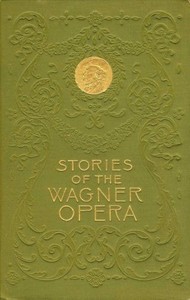
This digital edition of Stories of the Wagner Opera — Text and Context is described by source-level measurements including 40,475 words, 2 hr 56 min estimated reading time, and 4 detected text sections.
The text analysis averages about 30.0 words per sentence, while the detected sections provide another way to judge how the source is divided.
Project Gutenberg metadata also associates the work with “Operas -- Stories, plots, etc.,” connecting these edition facts with the source record’s subject description.
Explore this collection
These alternatives are selected using recorded categories and estimated reading time.
About 165 minutes
Opera Performance
37,755 recorded words. 11 minutes difference from this book's estimate.
View Gutenberg source #19958About 223 minutes
Opera Performance
51,194 recorded words. 47 minutes difference from this book's estimate.
View Gutenberg source #42918About 106 minutes
Opera Performance
24,293 recorded words. 70 minutes difference from this book's estimate.
View Gutenberg source #25063Search stored excerpts and compare books → Choose by your preferences →
Choices use stored catalog measurements. Estimates vary with reading speed. A shared category is a catalog label, not a claim that two books have the same argument or literary quality.
Search reads excerpt text stored with this catalog and links to its associated Gutenberg record. The connection is stored in the site database; this tool does not recheck that every excerpt is word-for-word identical to that external record. Excerpt search does not cover every chapter and does not verify historical publication dates.
Catalog snapshot checked: 2026-09-25. Coverage: 90 public books, 90 available source excerpts.
Read the complete public-domain text at its original source.
Read on Project GutenbergH.A. Guerber's Stories of the Wagner Opera (1905) opens with a preface that modestly describes its contents as 'short sketches' intended to give 'as clear as possible an outline of the great dramatist-composer's work.' The excerpts reveal a consistent method: each opera summary is preceded by a brief account of Wagner's compositional circumstances—his choice of subject, the location of writing, and the work's initial reception. For Rienzi, Guerber notes that the first performance lasted 'from six o'clock to midnight' and that Wagner himself conducted the third representation with such success that 'he was the hero of the day.' This framing positions the book as a guide to the operas' narrative content, but also as a chronicle of Wagner's artistic struggles.
Guerber pays close attention to the circumstances under which each opera was written. For Rienzi, she reports that Wagner began the poem and first two acts in 1838 during his residence in Riga, carried the score to Boulogne, and completed it at Meudon before forwarding it to Dresden in 1841. The account of The Nibelung's Ring includes Wagner's own words on his creative process: 'When I tried to dramatise the most important moment of the mythos of the Nibelungen in Siegfried's Tod, I found it necessary to indicate a vast number of antecedent facts.' Guerber traces how this led to the writing of Siegfried, then Die Walküre and Das Rheingold, showing the expansion of the cycle. She also notes the political troubles of 1849 that resulted in Wagner's banishment and his subsequent naturalisation in Zurich, where he turned his full attention to the Ring.
A recurring pattern in the excerpts is Wagner's deliberation between historical and legendary subjects. Guerber writes that after Tannhäuser, 'for the last time the conflicting claims of History and Legend presented themselves.' Wagner studied the story of Barbarossa but discarded it in favour of the Nibelungen Myths. This tension is visible in the book's structure: the first opera covered, Rienzi, is historical (founded on the same basis as Bulwer's novel), while later works like The Flying Dutchman, Tannhäuser, and Lohengrin draw from legend. Guerber's own text reflects this shift, with the historical Rienzi summary emphasising political context and the legendary summaries focusing on mythic elements such as the Rhine Maidens and the enchanted garden in Parsifal.
Guerber frequently documents how Wagner's works were received and the role of influential figures. For Rienzi, she notes that Meyerbeer called it 'the best opera-book extant' and gave Wagner introductions in Paris, yet the opera found no success in France. It was only through friends in Dresden—the tenor Tichatscheck and chorus-master Fisher—that it was produced. The third representation, conducted by Wagner, made him 'the hero of the day,' but this triumph 'was reviewed with envy by the admirers of the Italian school of music.' In The Master-Singers of Nuremberg, the character Hans Sachs is described as 'a general favourite among his townsmen,' and the crowd hails him with 'Hail Sachs! Hans Sachs! Hail Nuremberg's darling Sachs!'—a moment that mirrors Wagner's own desire for popular acclaim. Guerber's emphasis on these dynamics suggests that the book is as much about Wagner's career as about the operas themselves.
Guerber's Stories of the Wagner Opera is best approached as a companion that situates each opera within Wagner's biography and creative evolution. The summaries are concise, but the contextual details—the failed Parisian hopes, the banishment, the gradual expansion of the Ring cycle—offer a portrait of an artist persistently negotiating between ambition and circumstance. Readers interested in the operas' plots will find clear outlines; those curious about Wagner's development will discover a narrative of struggle and adaptation.
Guerber’s old sketches always made me feel Wagner’s longing for a story that sings true, history bending into legend. There, in Tristan and Isolda, that same ache finds its purest voice—a night that refuses the day’s demands. I have kept them side by side for years, two quiet companions whispering the same endless ache. Tristan and Isolda: Opera in Three Acts — Context and Discussion holds that hush well.
Save your reaction, strongest insight, and memorable passage.