
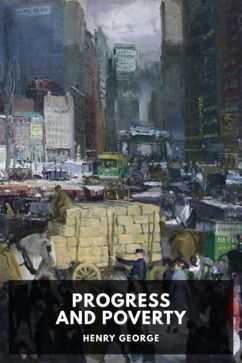
Progress and Poverty - Henry George
Read "Progress and Poverty - Henry George" Online
This book is available in the public domain. Start reading the digital edition below.
Book Preview
A short preview of the book’s content is shown below to give you an idea of its style and themes.
Let's be honest, a book from 1879 about economic theory doesn't sound like a page-turner. But Henry George's 'Progress and Poverty' defies that expectation. It's built on one powerful, frustrating question: Why does poverty persist and even deepen in times of great technological and social advancement?
The Story
There's no traditional plot with characters. Instead, George walks you through his logical investigation like a lawyer building a case. He starts with the obvious contradiction of his time (and ours): booming industry, new inventions, and growing cities, yet widespread want and stagnant wages for the majority. He systematically argues that the core issue isn't with capital or labor, but with land and its ownership. As a community grows, the value of land soars, but that windfall profit goes to landowners, not to the workers and innovators who actually create the progress. This, George claims, is the great bottleneck holding society back.
Why You Should Read It
You should read this book because it will change how you look at the world around you. When you see a new coffee shop open, a condo tower go up, or hear about a tech boom, you'll start to think about where the real value from that growth is flowing. George's writing is clear and fired by a moral urgency that's contagious. He's not a dry academic; he's a man on a mission to fix a broken system. His proposed solution—a single tax on the unimproved value of land—is radical, and you may not buy it. But the power of the book is in the problem he exposes, not just the fix he suggests. It makes you question the very foundations of how we've organized property and wealth.
Final Verdict
This book is perfect for curious readers who enjoy big ideas, for anyone frustrated by economic inequality, and for people who like to understand the 'why' behind societal structures. It's not a light read, but it's a profoundly rewarding one. If you've ever felt that the system is rigged but couldn't quite explain how, Henry George provides a century-old framework that still feels urgently relevant. Give it a shot—it might just be the most thought-provoking 19th-century book you'll ever pick up.
This is a copyright-free edition. You are welcome to share this with anyone.
Barbara Clark
8 months agoGreat read!
Melissa Davis
7 months agoHonestly, the arguments are well-supported by credible references. Absolutely essential reading.
Patricia Sanchez
1 year agoSurprisingly enough, the arguments are well-supported by credible references. I learned so much from this.
Mary Ramirez
10 months agoAs someone who reads a lot, the flow of the text seems very fluid. A valuable addition to my collection.









James Miller
1 month agoWithout a doubt, it challenges the reader's perspective in an intellectual way. One of the best books I've read this year.