
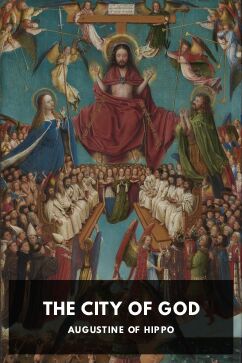
The City of God - Augustine of Hippo
Read "The City of God - Augustine of Hippo" Online
This book is available in the public domain. Start reading the digital edition below.
Book Preview
A short preview of the book’s content is shown below to give you an idea of its style and themes.
Okay, let's be real: this isn't a book with a plot in the normal sense. Rome gets sacked by the Visigoths, and everyone freaks out. Christians are getting blamed—people said their new God had abandoned the old Roman gods, causing the disaster. Augustine, a bishop in North Africa, spends over a decade writing this to respond.
The Story
Think of it as two stories running side-by-side. Augustine paints a picture of two "cities" or communities, built on different loves. The "City of Man" is built on love of self, power, and earthly glory—it's Rome at its most ambitious and cruel. The "City of God" is built on love of God and neighbor. The whole sweep of human history, from angels to the end of time, is the story of these two cities mixing it up, sometimes in conflict, sometimes intertwined. The fall of Rome isn't the end of the world's story; it's a chapter in a much bigger drama about where true peace and belonging are found.
Why You Should Read It
I picked this up expecting a dry argument. What I found was a mind wrestling with catastrophe in real time. Augustine isn't just theorizing; he's comforting scared people and challenging angry ones. His ideas feel weirdly modern. When he talks about how even good societies can be corrupted by the love of power, or how true justice is more than just strong laws, you'll find yourself nodding. It's philosophy, theology, history, and political theory all mixed together. The scale is breathtaking. He connects the dots from ancient myths to current events, asking what lasts when empires fall.
Final Verdict
This is for the patient reader who loves big ideas. It's perfect for anyone interested in why civilizations rise and fall, or the foundations of Western thought. It's definitely not a beach read—some parts are slow, and you'll need a good translation (I recommend Henry Bettenson's). But if you've ever looked at the news and wondered, 'What is wrong with the world?' or 'Where do we go from here?', spending time with Augustine's ancient, urgent conversation is surprisingly worthwhile. It's a monumental book for monumental questions.
There are no legal restrictions on this material. Access is open to everyone around the world.
Emily Lewis
1 year agoEssential reading for students of this field.
Sarah Brown
2 months agoI didn't expect much, but the arguments are well-supported by credible references. Don't hesitate to start reading.
Brian Lewis
1 year agoAmazing book.
William Clark
3 months agoI had low expectations initially, however the pacing is just right, keeping you engaged. I will read more from this author.







Andrew Lewis
9 months agoHonestly, it provides a comprehensive overview perfect for everyone. I couldn't put it down.