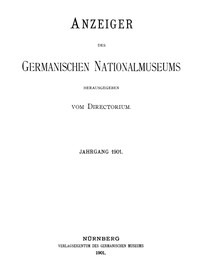
dargestellt (aͤ, oͤ, bzw. uͤ), teilweise durch die Umlaute ä, ö, bzw. ü; diese Schreibweisen treten stellenweise auch innerhalb eines Satzes vermischt auf. Namen werden meist gesperrt gedruckt, jedoch wurde dies insbesondere hinsichtlich Vornamen und Namenszusätzen uneinheitlich vorgenommen; im vorliegenden Text wurden diesbezüglich aber keine Änderungen durchgeführt. Eine große Zahl von Begriffen wurden in unterschiedlichen Schreibweisen wiedergegeben (z.B.: ‚Association‘ vs. ‚Assoziation‘, ‚Oel‘ vs. ‚Öl‘), auch innerhalb desselben Abschnitts. Diese Varianten wurden in der vorliegenden Fassung erhalten, sofern der Sinn des Textes dennoch eindeutig erschlossen werden kann. Der Kupferstich von Hans Brosamer wurde zwei Mal verwendet (auf den Seiten 30 und 131). Das Symbol [*pfund] wird meist als Währungseinheit gebraucht; [*Z] bezeichnet ein Symbol, das annähernd einem liegenden Buchstaben N ähnelt. Der Text des Facsimiles auf S. 146 (‚Der Allergroßmechtigist vnüberwindlichist ka ser...‘) wurde vom Bearbeiter eingefügt. Schriftschnitte, die von der Normalschrift abweichen, werden durch die folgenden Sonderzeichen dargestellt: kursiv: _Unterstriche_ fett: =Gleichheitszeichen= gesperrt: +Pluszeichen+ Hochgestellte Zeichen werden durch vorangestellte Caretsymbole gekennzeichnet; mehrere Zeichen werden dabei mit geschweiften Klammern zusammengefasst, z.B. xII^{mo}. ###################################################################### ANZEIGER DES GERMANISCHEN NATIONALMUSEUMS. [Illustration] JAHRGANG 1901. HEFT I. JANUAR-MÄRZ. NÜRNBERG 1901. VERLAGSEIGENTUM DES GERMANISCHEN MUSEUMS. Inhalt. Seite I. Anzeiger des Germanischen Nationalmuseums I-XX II. Mitteilungen aus dem Germanischen Nationalmuseum. Vorlagen zu Sonnenuhren von Georg Brentel von Lauingen, von Dr. +Th. Hampe+ 3 Herd und Herdgeräte in den Nürnbergischen Küchen der Vorzeit, von Dr. +Otto Lauffer+. I. 10 Über den großen Nürnberger Glückshafen vom Jahre 1579 und einige andere Veranstaltungen solcher Art (I.), von Dr. +Th. Hampe+ 30 Literarische Notizen 41 ANZEIGER DES GERMANISCHEN NATIONALMUSEUMS HERAUSGEGEBEN VOM DIRECTORIUM. JAHRGANG 1901. NÜRNBERG VERLAGSEIGENTUM DES GERMANISCHEN MUSEUMS 1901. 1901. Nr. 1. Januar-März. ANZEIGER DES GERMANISCHEN NATIONALMUSEUMS. CHRONIK DES GERMANISCHEN MUSEUMS. STIFTUNGEN. Die +Herren Ältesten der Berliner Kaufmannschaft+, die uns schon öfter durch Geschenke erfreuten, haben uns neuerdings den Betrag von 250 m. gespendet. Wie seit einer Reihe von Jahren, so haben uns auch heuer ungenannt bleiben Wollende in +Nürnberg+ 300 m. zukommen lassen. NEU ANGEMELDETE JAHRESBEITRÄGE. Se. Königliche Hoheit der +Großherzog Wilhelm von Sachsen-Weimar+ gewährte dem Museum einen Jahresbeitrag von 200 m. Ferner giengen uns zu: =Von Stadtgemeinden:= =Falkenstein i. V.= 5 m. =Nauen= 10 m. =Oederan= 5 m. =Orsoy= 6 m. =Ottweiler= 5 m. =Pasewalk= 10 m. =Peine= 20 m. =Pyritz= 10 m. =Recklinghausen= 20 m. =Rees= 3 m. =Rehau= 5 m. =Rheinberg= 3 m. =Rinteln= 5 m. =Rödelheim= 3 m. =Rosslau= 10 m. =Preuss. Stargard= 10 m. =Von bayrischen Distriktsräten:= =Bruck= 20 m. (für 1900). =Höchstadt a. D.= 10 m. =Lauingen= 10 m. =Mindelheim= 10 m. =Oberdorf= 15 m. (für 1900). =Ochsenfurt= 5 m. =Schrobenhausen= 10 m. (für 1900). =Simbach= 20 m. (für 1900). =Wegscheid= 10 m. (ab 1900). =Von Vereinen, Korporationen etc.:= =Leipzig= »Roter Löwe«, Verein für Geschichte und geschichtliche Hilfswissenschaften an der Universität, (statt bisher 3 m.) 10 m.; Kgl. histor. Seminar a. d. Universität 10 m. =Tübingen.= Normannia, Studenten-Verbindung, 7 m. 50 pf. =Von Privaten:= =Aachen.= Vendel, Professor, 2 m. =Aschaffenburg.= Franz Dahlem, Fabrikbesitzer 3 m. (ab 1900). =Basel.= Groos, Professor, (statt bisher 2 m.) 4 m.; Haerle-Metzler 4 m.; Ph. Östreicher, Stadtrat, in Lörrach 4 m. =Bayreuth.= Max Gebhardt, in Markt Redwitz 2 m.; Wilh. Hensel 2 m. =Cadolzburg.= Klepper, k. Grundbuchanlegungskommissär, 2 m.; Späth, k. Oberamtsrichter, 2 m.; Zeltner, Gutsbesitzer, auf Pleikersdorf, (statt bisher 2 m.) 3 m. =Colmar i. E.= Dr. Voßen, Justizrat, 3 m. (ab 1899). =Crimmitschau.= Arno Donath Franke, Kaufmann, 2 m.; Fritz Laue, Kaufmann, 3 m.; Gustav Tietze, Rechtsanwalt, 3 m. =Ebermannstadt.= Hans Freiherr von Reitzenstein, k. Kammerherr u. Bezirksamtsassessor, 2 m. =Eger.= Dr. Albert Ritter von Krobshofer, k. k. Notar, 2 Kronen. =Elberfeld.= Dape, Professor, in Bodenbach 5...
This is a limited preview. Download the book to read the full content.





Aiden Walker
7 months agoBased on the summary, I decided to read it and the plot twists are genuinely surprising. A valuable addition to my collection.